
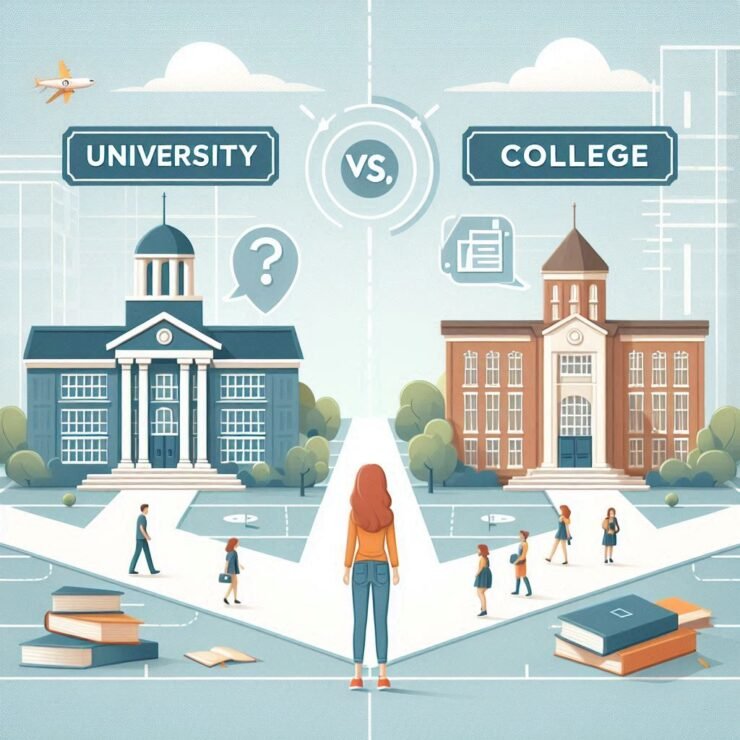
Introduction: Defining the Terms
In the realm of higher education, the terms “university” and “college” often arise, yet they carry distinct meanings that vary across different regions and educational systems. Generally speaking, a university is an institution that offers undergraduate and graduate degree programs and typically comprises multiple colleges or schools within its framework. These institutions are geared towards fostering advanced research, scholarly activities, and a wider array of professional fields. Universities prioritize academic diversity and usually provide a comprehensive selection of disciplines, allowing students to pursue specialized knowledge alongside general education.
Conversely, the term “college” is often used in a more versatile manner. In some countries, particularly the United States, colleges may refer to smaller institutions focused primarily on undergraduate education, granting bachelor’s degrees and occasionally associate degrees. Colleges often emphasize a more personalized learning environment, smaller class sizes, and greater student-faculty engagement. Furthermore, colleges may also involve a particular set of values or mission, often emphasizing liberal arts education, vocational training, or even specific professional fields. In other regions, the term “college” can be synonymous with “university,” thereby adding to the potential confusion for prospective students.
The objective of this blog post is to explore the nuanced differences between universities and colleges, examining their unique characteristics and varying purposes. By understanding these distinctions, potential students can make informed decisions regarding their educational journeys, aligning their choices with their academic aspirations and career goals. The discourse will delve into factors such as program offerings, campus environments, and overall student experiences, ultimately aiding in the selection of the most suitable educational path.
Educational Structure: What Sets Them Apart?
The distinction between universities and colleges is often a topic of interest among prospective students, particularly in regards to their educational structure. It is important to understand the varying degrees they offer and the focus of their academic programs. Generally, universities provide a broader array of educational opportunities, awarding bachelor’s, master’s, and doctoral degrees. In contrast, colleges typically concentrate on undergraduate education, offering associate and bachelor’s degrees with a limited scope for graduate studies.
Universities are designed to foster advanced research and professional development, making them ideal for students looking to pursue higher levels of education. They often include various specialized schools and departments, such as law, medicine, or business, catering to a diverse range of academic interests. This structure allows for a more intense focus on research, where students can engage with faculty members on critical projects, partake in cutting-edge studies, and contribute to scholarly articles. Consequently, universities often attract students aspiring for careers in academia or fields requiring advanced qualifications.
In contrast, colleges tend to emphasize teaching and provide a more personalized educational experience. Their programs are sometimes smaller in scale, leading to better student-faculty interaction, which can enhance learning. Colleges may also have a more community-oriented approach, nurturing a strong campus culture that is particularly appealing to undergraduates. The emphasis is on imparting foundational knowledge and practical skills, preparing students for immediate entry into the workforce or for further academic pursuits, should they choose to continue their education at a later stage.
This structural division between universities and colleges plays a significant role in shaping students’ educational journeys. Ultimately, the choice between attending a university or a college should be influenced by individual career goals, preferred learning environments, and the types of degrees sought.
Campus Life: A Comparative Analysis
The campus life at universities and colleges varies significantly, influencing the overall student experience and social environment for those attending each type of institution. One of the primary differences lies in the size of the campus and the student population. Universities typically host a larger number of students, ranging from several thousand to tens of thousands. This vastness often provides a more dynamic atmosphere with diverse social opportunities, allowing students to engage with a variety of interests across academic disciplines.
In contrast, colleges generally maintain smaller student bodies, which can foster a tight-knit community. The intimate environment of a college allows for strong interpersonal relationships among students and faculty. These close connections often lead to enhanced mentorship opportunities and a personal approach to education, which can be deeply beneficial for students seeking support and guidance.
Extracurricular activities also play a critical role in defining campus life. Universities usually offer a wider array of organizations, clubs, and athletic programs, reflecting their larger student population and greater resources. This variety can cater to a broader spectrum of interests and hobbies, enabling students to explore new areas and form diverse social circles. Many universities also host large events, guest speakers, and cultural activities, providing students with many avenues to engage outside the classroom.
On the other hand, colleges may provide fewer options for extracurricular involvement but often emphasize quality over quantity. The smaller setting allows for more significant student participation in each activity, fostering deeper connections among members. Students at colleges may find opportunities for leadership roles within clubs more accessible, enhancing their overall college experience.
Ultimately, the campus life at universities and colleges offers distinct experiences that reflect their individual characteristics and values, shaping how students interact and thrive within their educational journey.
Cost and Financial Considerations
When comparing universities and colleges, understanding the financial implications is crucial for prospective students. Tuition fees tend to differ significantly between these two types of institutions. Generally, universities, which often offer a wide variety of undergraduate and graduate degree programs, may have higher tuition costs owing to their extensive resources and larger campus facilities. In contrast, colleges, particularly community colleges, usually offer a more affordable alternative, focusing on associate degrees and vocational training. The average cost of attendance at these institutions can vary, so it is important for students to assess their financial situations against the programs they are interested in pursing.
It is essential to explore the scholarships and financial aid opportunities available at both universities and colleges. Many universities provide generous financial aid packages and scholarships based on merit or need, which can significantly reduce the overall cost of attending. Furthermore, some institutions may offer work-study programs that allow students to earn money while studying. Colleges, especially community colleges, tend to have fewer scholarship opportunities but may provide state-specific grants and financial assistance programs tailored to local students. Evaluating the total financial aid landscape can guide potential students in identifying the best fit for their financial situation.
An important aspect of the financial considerations is the potential return on investment (ROI) for graduates. Graduates from universities usually earn higher starting salaries due to their advanced degrees and the extensive professional networks available through these institutions. Conversely, graduates from colleges may find immediate employment opportunities within their field of study, particularly in vocations that require less formal education. Hence, students must weigh the cost of education against the expected financial outcomes within their chosen career paths, considering both short-term and long-term benefits.
Career Opportunities: Which is More Beneficial?
When considering the differences between universities and colleges, one of the most pivotal aspects that potential students contemplate is career opportunities post-graduation. Employment rates for graduates often highlight the effectiveness of a particular educational path. Generally, graduates from universities tend to secure jobs at higher rates than their counterparts from colleges. This trend can be attributed to the broader range of programs and resources that universities typically offer, including career services, internships, and strong alumni networks.
Moreover, average salaries for university graduates are often higher compared to those who earn degrees from colleges. While this discrepancy can depend on various factors such as the field of study and individual skill levels, on average, university graduates may often enjoy more lucrative positions right out of school. Fields such as engineering, healthcare, and technology, which are commonly offered at universities, frequently require advanced knowledge and skills, leading to better financial prospects for graduates.
An important consideration for prospective students is the perception of employers regarding degrees obtained from universities and colleges. Research indicates that many employers may favor candidates with university degrees, particularly for competitive roles in specialized industries. This perception usually stems from the rigorous academic environment that universities provide, alongside their extensive resources for research and professional development. While degrees from colleges certainly hold value, certain professions may emphasize the need for a university education, which could influence a graduate’s entry into the workforce and their advancement as they progress in their careers.
Ultimately, while both universities and colleges can provide pathways to fulfilling careers, university graduates may find themselves with better job prospects and higher earning potential, owing to the comprehensive education they receive and the significant employer recognition tied to their degrees.
Personal Fit: Assessing Your Academic Goals
When contemplating the differences between a university and a college, it is crucial to reflect on your personal academic goals and career aspirations. The choice between these two educational institutions should not solely hinge on external factors, such as prestige or location, but rather on a comprehensive understanding of your learning preferences and future ambitions.
A university typically offers a broader range of academic programs, research opportunities, and larger campuses, making it more suitable for students interested in pursuing advanced degrees or specialized fields. Conversely, colleges often provide focused programs with a more hands-on approach, which can be ideal for those seeking practical skills relevant to their career path. Thus, assessing your specific academic interests can significantly influence your decision. For example, if you are inclined towards liberal arts or technical diplomas, a college may fulfill your needs better than a university.
Your learning style also plays a vital role in this decision-making process. Universities often employ a lecture-based instructional approach, which might not cater to students who thrive in smaller, interactive learning environments. On the other hand, colleges frequently emphasize close-knit classroom settings, allowing for personalized attention and collaborative learning experiences. By analyzing your study habits and preferences, you can determine which environment is more conducive to your success.
Furthermore, consider your long-term career interests. Research different fields to understand the educational pathways typically taken by successful professionals in those areas. Some careers may require a university degree, while others might place a higher value on practical experience gained through a college setting. Thus, conducting an introspective evaluation of your goals helps establish a clear direction for your educational journey.
Success Stories: Alumni Perspectives
Alumni testimonies serve as powerful reflections of the significant impact that universities and colleges can have on their graduates’ lives and careers. Understanding these personal narratives can be invaluable for prospective students deliberating their options for higher education.
Take the story of Emily Johnson, a graduate of a state university where she pursued a degree in biomedical engineering. Emily emphasizes that her time at the university was transformative. The hands-on experience provided through internships and cutting-edge labs prepared her for a competitive job market. “The rigorous curriculum and the research opportunities enhanced my problem-solving skills, which are essential in my current role as a project manager for a medical device company,” she shares. This perspective underscores the importance of resources and networking opportunities found within university settings.
On the other hand, Jake Smith, a graduate from a community college, narrates a different yet equally compelling experience. He enrolled in a two-year program in information technology, which led him to secure a well-paying job early in his career. Jake highlights the supportive environment and personalized attention he received from faculty, which helped him build confidence. “Community college allowed me to explore my interests without the heavy financial burden, paving the way for a smooth transition to a four-year institution,” he states. His journey exemplifies how colleges can effectively set the stage for further education or immediate employment.
These alumni stories showcase the varied pathways available through higher education. Both institutions foster skills and experiences that enable graduates to succeed in their chosen fields. Whether opting for the comprehensive resources of a university or the focused guidance of a college, students can find programs that align with their academic and career aspirations. Ultimately, these narratives illustrate that success is not solely defined by the type of institution but by how well students leverage their unique experiences for personal growth and professional achievement.
Global Perspectives: Differences Across Countries
The distinctions between universities and colleges vary significantly across the globe, influenced by cultural, historical, and educational contexts. In Europe, for example, the term “university” generally refers to institutions that offer a wide range of undergraduate and graduate degrees. These universities emphasize research and are often characterized by their autonomous governance and rigorous academic structure. Colleges, in contrast, can refer to smaller institutions or components of university systems that may focus on undergraduate education or offer vocational training. The United Kingdom presents a similar scenario, where universities award degrees while colleges serve as preparatory or support establishments within the tertiary education framework.
In Asia, the definitions can be quite flexible. Countries like Japan and South Korea differentiate between universities and colleges primarily based on the level of degrees offered. Japanese universities often prioritize research and higher education degrees, while colleges may cater to more vocational training. On the other hand, in South Korea, both universities and colleges can offer four-year degree programs, but the competition for university admission remains significantly stiffer, lending a more prestigious status to universities.
Australia presents another nuanced perspective. Here, “universities” are degree-granting institutions engaged in extensive research, while “colleges” can denote either vocational education providers or residential colleges affiliated with universities. The latter provide accommodation and community for students, rather than serving as separate educational entities. This distinction highlights the importance of context when interpreting terminology, as the educational journey and the roles of universities and colleges can greatly differ by region.
Ultimately, understanding the international context of universities and colleges is essential for students navigating higher education choices. The variations in terminology and structure illustrate the need for prospective students to carefully evaluate their options based on the specific characteristics and offerings of institutions within their country or region.
Conclusion: Making the Right Choice for You
In evaluating the differences between a university and a college, it is essential to consider various factors that align with your personal circumstances and career aspirations. The distinction between these two types of institutions often revolves around their size, academic offerings, campus culture, and overall educational philosophy. While universities typically provide a broader range of programs, including graduate studies and research opportunities, colleges tend to offer a more focused and intimate educational environment, often emphasizing undergraduate education and personalized learning experiences.
Your decision should reflect your academic goals and professional ambitions. If your objective is to pursue advanced research or to secure a position in a specialized field, a university may serve you better. Conversely, if you seek a more personalized education with close interactions with faculty and smaller class sizes, a college might be the more suitable option. Additionally, considering the financial implications, including tuition fees and available scholarships, can play a crucial role in your decision-making process.
It is also advisable to explore potential institutions thoroughly. Attend open houses, engage with current students, and immerse yourself in campus life through virtual tours or on-site visits. Conducting this research can help you gain a clearer understanding of each institution’s unique offerings and determine the one that best resonates with your values and expectations.
Making an informed decision requires careful consideration of your long-term goals, financial situation, and preferred learning environment. Ultimately, each individual must weigh these aspects to select between a university and a college, ensuring that the choice aligns with their personal and professional aspirations.